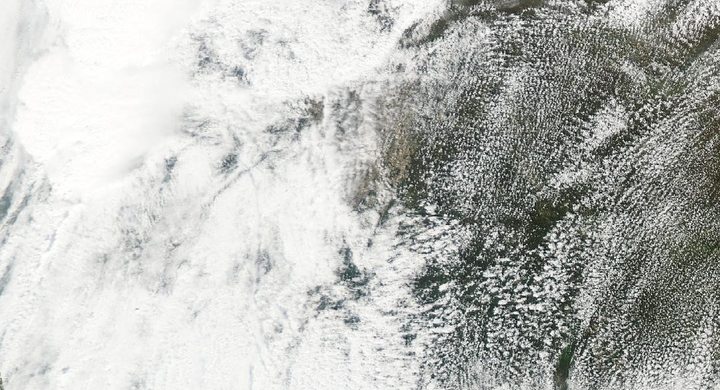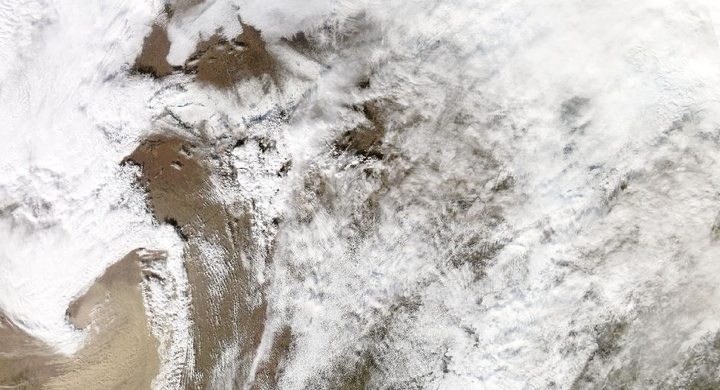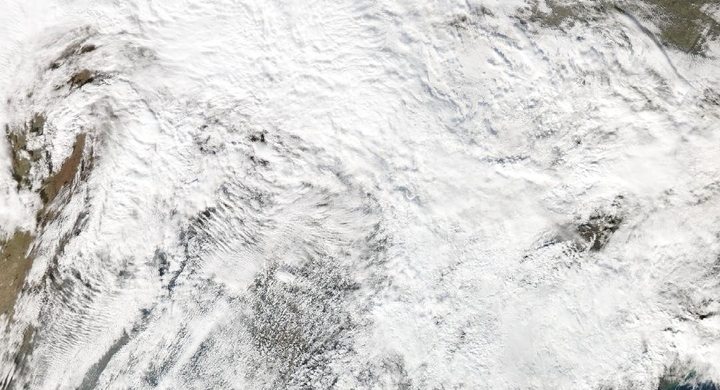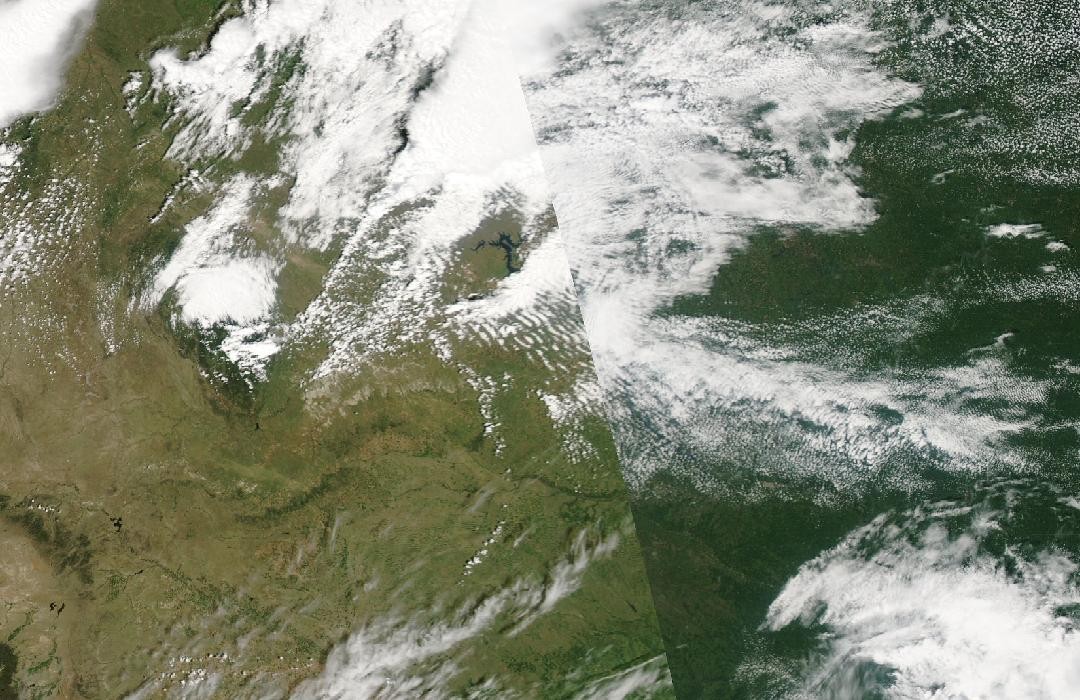
Follow the sequence
A supercell produces very large hail
NWS Aberdeen documents a storm moving southeast across central South Dakota. Near Vivian, it produced very large hail alongside damaging winds and a reported tornado; the recovered record stone was one sample from a varied hailfall.
The measurement receives formal review
NOAA’s National Climate Extremes Committee reviewed the stone’s authenticity, physical plausibility and handling. Its later memorandum identifies this review date, which is distinct from the day the hail fell.
NOAA announces the verified dimensions
The agency’s public release announced records for diameter and weight. The case window includes this verification process; it does not imply that the thunderstorm or hailfall persisted for a week.
Basis: NOAA National Weather Service, Aberdeen [1] · NOAA National Climatic Data Center, National Climate Extremes Committee [2] · NOAA [3]
Selected observations & analyses
These entries preserve the source’s reported quantities or analyses. They are not a newly processed observational dataset.
| Evidence | Reported value or finding | Provenance |
|---|---|---|
| Measured maximum diameter | 8.0 inches / 20.32 cm | National Climate Extremes Committee verification; measurement of the recovered stone after some melting and sublimation, not its unknown exact airborne diameter. |
| Measured mass | 1.9375 pounds / 0.879 kg | Same committee report; the stone established a weight record independently of its maximum-diameter record. |
| Radar evidence | Three-body scattering spikes and a bounded weak-echo region | NWS Aberdeen event analysis at 22:58 UTC; radar signatures supporting interpretation of a strong hail-producing storm, not a direct ruler on the recovered stone. |
The atmospheric mechanism
Hail grows when ice particles collect supercooled liquid water within a thunderstorm. A strong updraft and a favorable trajectory can allow a particle to spend time in a region rich in that liquid water before it falls out. Growth is therefore not determined by surface temperature alone, and a large stone does not require a literal stack of identical up-and-down trips through the cloud.
The measurement story adds another layer. An irregular stone can have a great maximum diameter without the greatest circumference, while mass depends on its whole three-dimensional shape and density. After impact, melting changes all three quantities. NWS Aberdeen notes that a power interruption complicated preservation. These facts explain why the verified measurement is a defensible minimum description of the recovered object rather than a precise reconstruction of the largest size reached aloft.
Basis: NOAA National Weather Service, Aberdeen [1] · NOAA National Climatic Data Center, National Climate Extremes Committee [2] · NOAA [3]
What the evidence does not establish
The official dimensions do not reveal the exact updraft speed or the size of every stone in the storm. Radar hail signatures indicate scattering and storm structure; they are not direct measurements of a particular hailstone. The precipitation lab models melting and refreezing of falling particles, not hail growth, so the related storms lab is used only to explore buoyancy and lift.
Treat diameter, circumference and mass as separate observations, and record the interval and handling between an ice particle’s fall and its official measurement.
Sources & provenance
- Record Setting Hail Event in Vivian, South Dakota on July 23, 2010 NOAA National Weather Service, Aberdeen · Publication date not statedReference only; original paraphrase; no source media reproduced.
- Official Documentation of the Verification of the Vivian, SD Record Setting Hailstone of 2010 NOAA National Climatic Data Center, National Climate Extremes Committee · 2010-11-01Reference only; original paraphrase; no source media reproduced.
- South Dakota Storm Produces Record Hailstone NOAA · 2010-07-30Reference only; original paraphrase; no source media reproduced.
Explanations and diagrams are original educational interpretations. Source institutions have not endorsed or reviewed this publication. How we distinguish evidence from models.