What was observed
The station measures 38°C
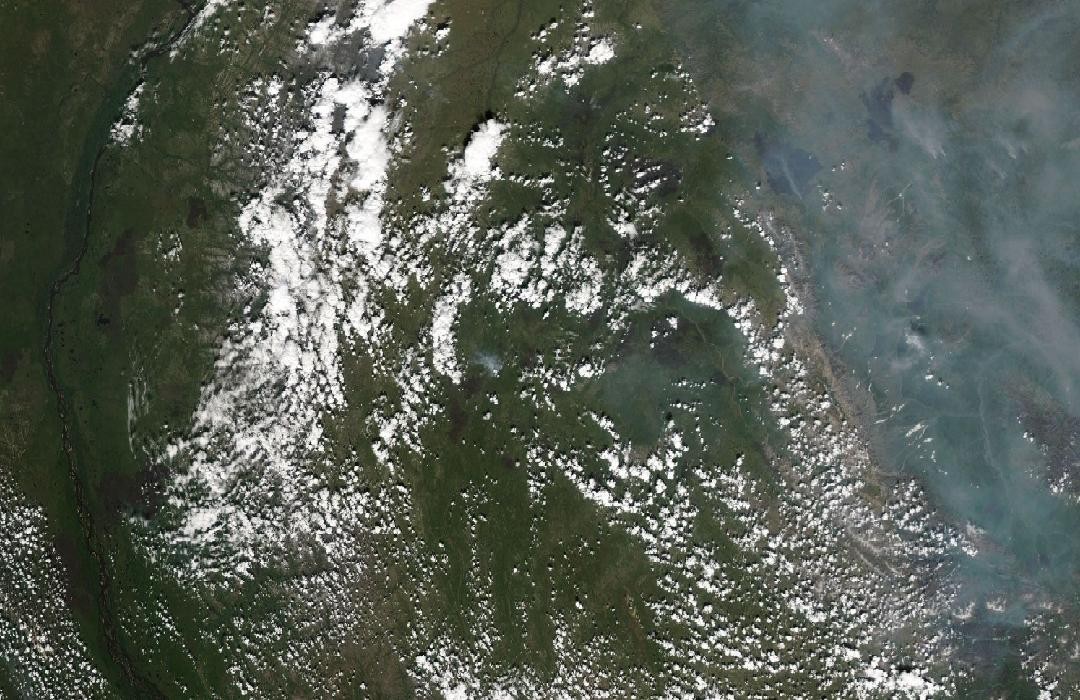
Verkhoyansk recorded a daily maximum of 38°C. This entry focuses on that observation within the broader Siberian heat episode; WMO’s formal recognition followed on 14 December 2021 and is not treated as a second weather event.
Basis: World Meteorological Organization [1] · World Meteorological Organization [2]
Selected observations & analyses
These entries preserve the source’s reported quantities or analyses. They are not a newly processed observational dataset.
| Evidence | Reported value or finding | Provenance |
|---|---|---|
| Screened air temperature | 38.0°C on 20 June 2020 | WMO’s completed evaluation of the Verkhoyansk station observation, announced in December 2021. |
| Independent consistency checks | Surrounding stations and a strong upper-level ridge were consistent with the reported extreme | WMO evaluation summary, incorporating observing metadata and ERA5 reanalysis; an assessment rather than a second local thermometer reading. |
| Broader June context | Parts of Arctic Siberia had June-average temperatures up to about 10°C above normal | WMO’s July 2020 summary of Copernicus analysis; a monthly regional anomaly, not an anomaly assigned to the single 38°C reading. |
The atmospheric mechanism
High latitude does not prevent a continental location from becoming very hot in summer. Long daylight provides energy over many hours, and distance from an ocean limits maritime moderation. An upper ridge can support a persistent warm air mass and reduced opportunities for cooler systems to replace it. This explains how Arctic location and a high summer maximum can coexist without implying that the region has lost its cold-season climate.
The WMO investigation checked more than whether the number looked plausible. Equipment and siting were assessed, neighbouring observations were compared, and the circulation was examined. Each addresses a different potential problem: an unsuitable exposure, an isolated faulty report or a reading inconsistent with the regional air mass. Agreement does not make a station represent every nearby landscape, but it strengthens confidence that the observation itself is real.
The linked instrument lab helps distinguish point measurements from spatial products. A weather station measures air at its exposure, while a satellite thermal image responds to radiation from a surface or cloud. A warmer satellite surface estimate would not automatically supersede the air-temperature record because the two systems observe different variables.
Basis: World Meteorological Organization [1] · World Meteorological Organization [2]
What the evidence does not establish
The record category concerns measured temperature at or north of the Arctic Circle, not every possible definition of the Arctic. The event maximum, monthly anomaly and long-term trend have different spatial and temporal scales. This single observation does not quantify the probability change caused by climate change; that requires a separate attribution study and clearly defined event metric.
An extreme reading becomes more useful when its measurement method, record category and independent checks remain visible alongside the number.
Sources & provenance
- WMO recognizes new Arctic temperature record of 38°C World Meteorological Organization · 2021-12-14Reference only; original paraphrase; no source media reproduced.
- June sees more global heat, especially in Arctic Siberia World Meteorological Organization · 2020-07-08Reference only; original paraphrase; no source media reproduced.
Explanations and diagrams are original educational interpretations. Source institutions have not endorsed or reviewed this publication. How we distinguish evidence from models.