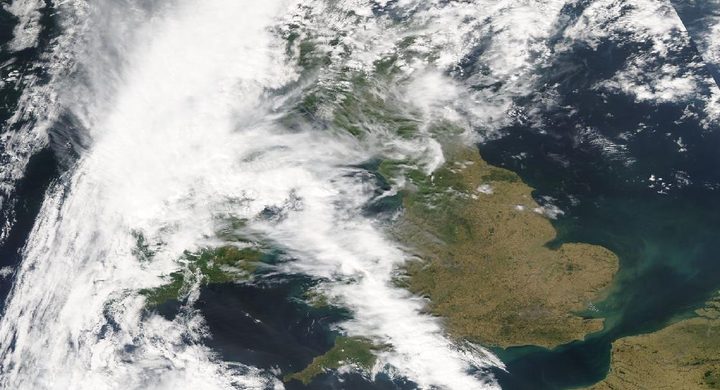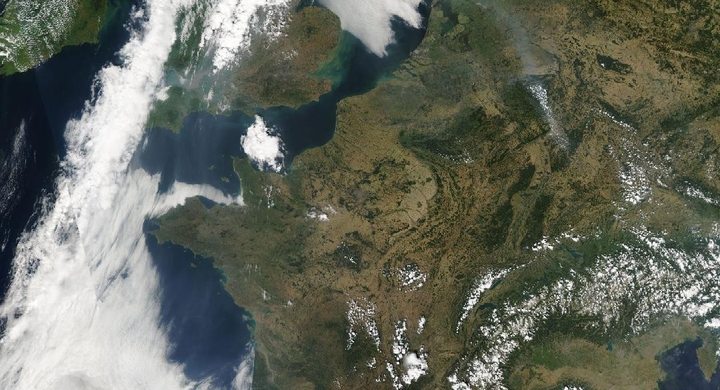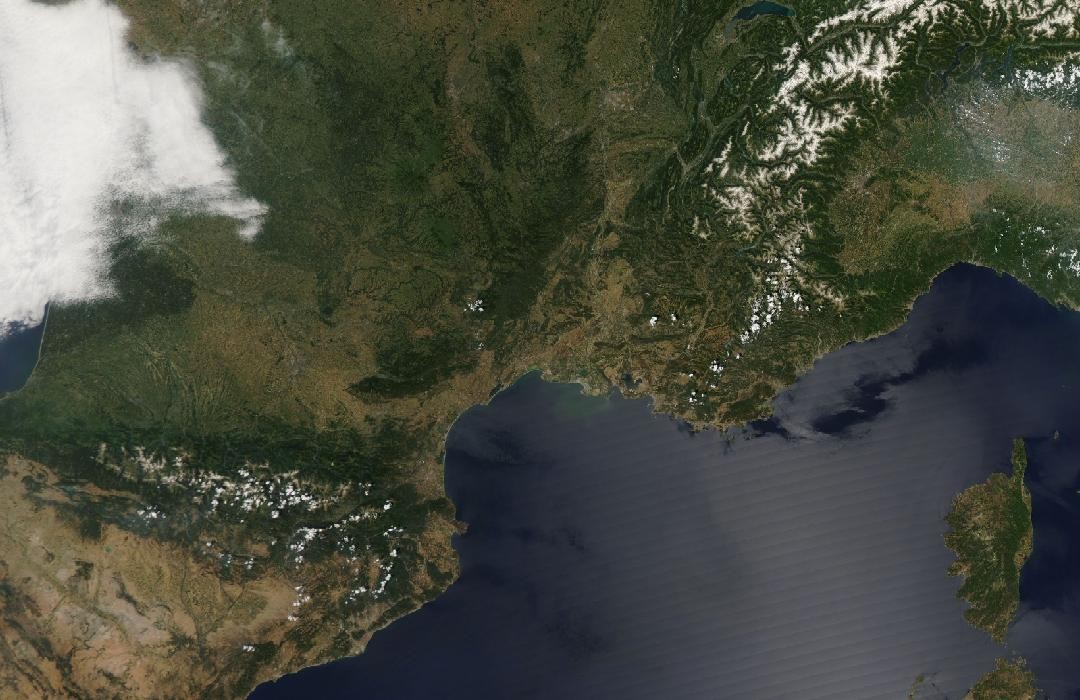
Follow the sequence
The national heatwave begins
Météo-France defines the principal national episode as 25–30 June. The timing made it exceptional for June, although local hot conditions did not all begin or end at the same hour.
Widespread warmth raises the national mean
The national daily mean reached 27.9°C on 27 June, the highest June daily mean in Météo-France’s 1900–2019 comparison. A broad statistic peaked before the event’s largest station maximum.
The station record is reached
Vérargues measured 46.0°C and nearby Gallargues-le-Montueux measured 45.9°C. The agency’s retrospective identifies the Vérargues observation as the national maximum.
The national episode ends unevenly
The selected national heatwave window closes on 30 June, but Météo-France notes that heat continued in the southeast into July. A national boundary is not a simultaneous local temperature change.
Basis: Météo-France [1] · Météo-France [2]
Selected observations & analyses
These entries preserve the source’s reported quantities or analyses. They are not a newly processed observational dataset.
| Evidence | Reported value or finding | Provenance |
|---|---|---|
| Station maximum | 46.0°C at Vérargues on 28 June | Météo-France’s final retrospective account, superseding earlier emphasis on the nearby 45.9°C report. |
| National mean | 27.9°C on 27 June, 8.6°C above the reference normal used in the account | Météo-France national daily-mean analysis; not the maximum thermometer reading. |
The atmospheric mechanism
Large-scale circulation can maintain a warm air mass while strong summer sunlight heats the surface. The surface transfers some energy to the air through turbulent mixing, so measured air temperature responds to both the imported air and the local energy budget. The station maximum therefore should not be interpreted as the temperature of sunlit pavement, which is a different surface and can have a very different value.
Record verification is another part of understanding the event. Observations from neighbouring sites need not be identical, and an initial report is not necessarily the final highest value once the network has been checked. The 46.0°C and 45.9°C measurements are not contradictory estimates of one instrument: they describe separate places. Retaining names and dates makes the distinction easy to follow without turning small differences into a regional temperature map.
Basis: Météo-France [1] · Météo-France [2]
What the evidence does not establish
The source’s national mean and station maxima use different averaging procedures. The June case is also separate from France’s second heatwave in July 2019. This account does not claim that all of France reached 46°C, assign a share of the maximum to one physical process, or treat the station value as a direct measurement of human exposure.
Keep the location, variable and verification status beside a record value; nearby observations and national averages can all be correct while describing different things.
Sources & provenance
- Été 2019: deux canicules exceptionnelles Météo-France · 2020-03-05Reference only; original paraphrase; no source media reproduced.
- France: 2019 au troisième rang des années les plus chaudes Météo-France · 2019 annual assessmentReference only; original paraphrase; no source media reproduced.
Explanations and diagrams are original educational interpretations. Source institutions have not endorsed or reviewed this publication. How we distinguish evidence from models.