Follow the sequence
An already active season
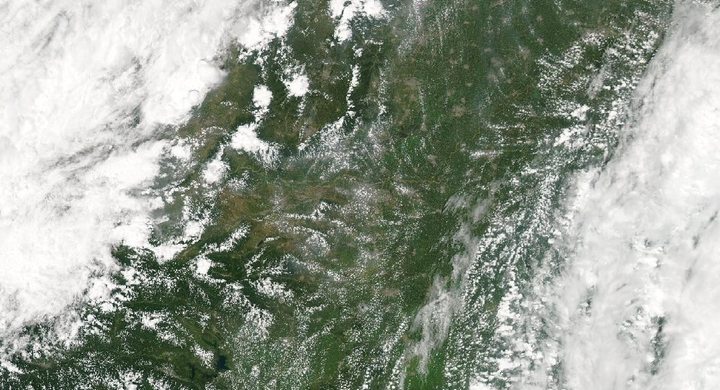
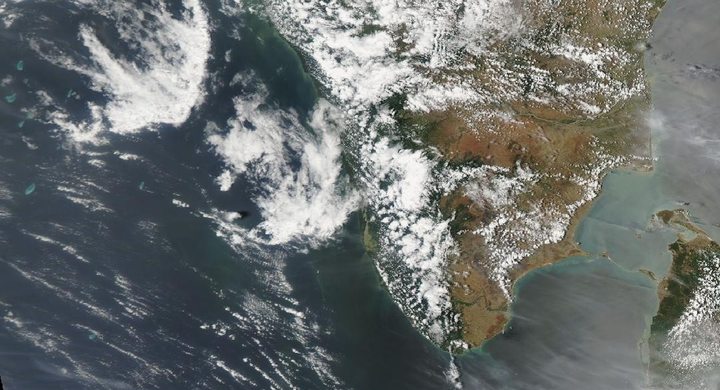
Pakistan had experienced severe monsoon weather since June. August began within a longer wet season, not over a uniformly dry initial landscape.
An intense daily observation
The Pakistan Meteorological Department reports 355.0 mm at Padidan for its wettest observed day of the month.
The monthly scale becomes clear
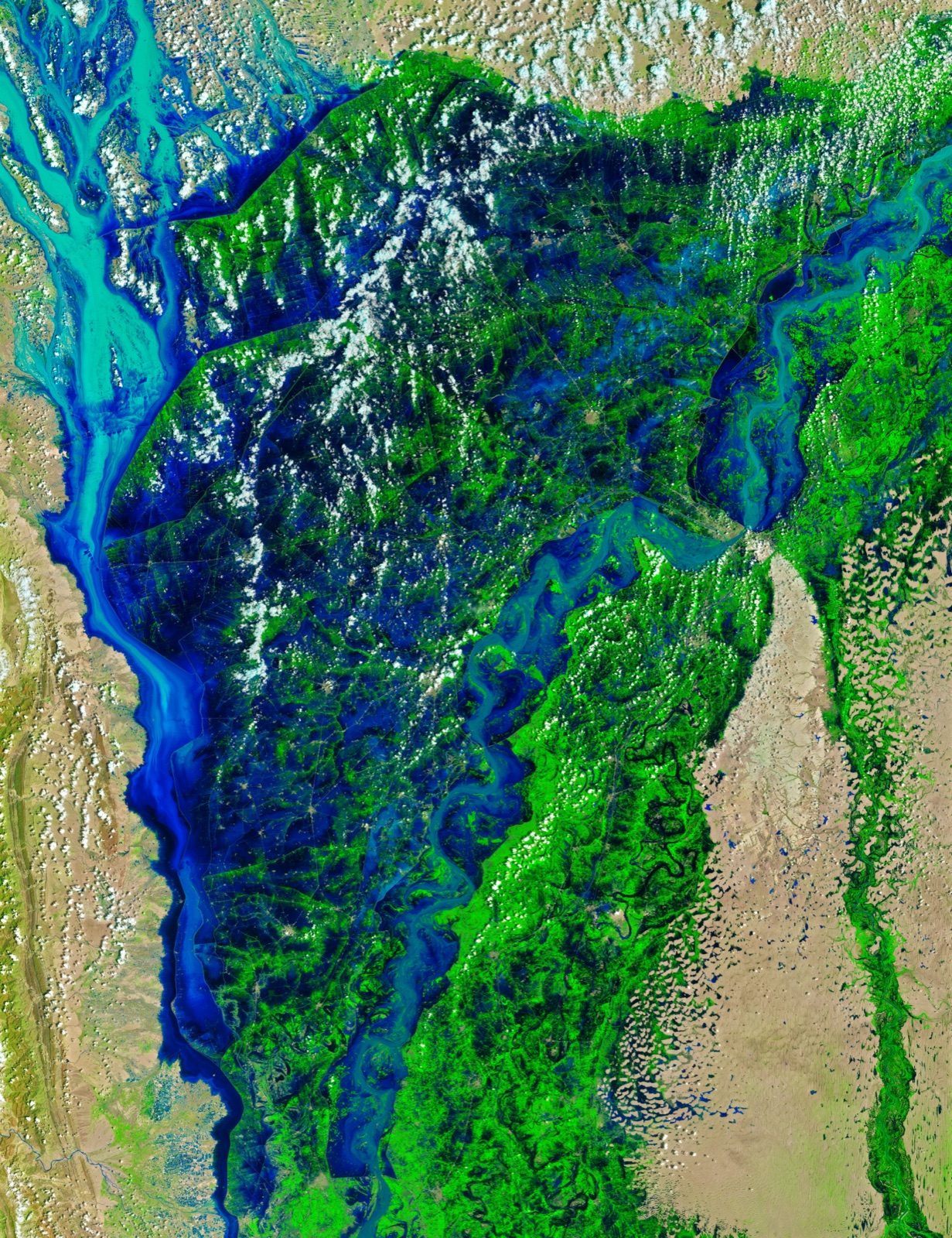
The completed month was Pakistan’s wettest August in the national series beginning in 1961, with the largest relative anomalies in Sindh and Balochistan.
Basis: Pakistan Meteorological Department [1] · Copernicus Climate Change Service [2]
Selected observations & analyses
These entries preserve the source’s reported quantities or analyses. They are not a newly processed observational dataset.
| Evidence | Reported value or finding | Provenance |
|---|---|---|
| National August rainfall anomaly | 243% above average | Pakistan Meteorological Department August 2022 summary; a national aggregation, not every station. |
| Padidan daily rainfall | 355.0 mm on 19 August | PMD monthly summary; daily observation as dated by that report. |
| Padidan monthly rainfall | 1,228.5 mm in August | PMD monthly summary; station accumulation over the month. |
The atmospheric mechanism
A monsoon is a seasonal circulation with episodes of concentrated rain, not an uninterrupted downpour at every point. Moisture transport, lifting and the movement or persistence of rain-producing systems determine the local sequence. In this case, high monthly accumulation coexisted with exceptionally intense individual days. Flood consequences then depended on the resulting river and surface-water responses.
Anomaly wording needs care. “243% above average” means a total of 343% of the reference average, not 243% of it. A national area-weighted number can also conceal a much larger anomaly in one province and a smaller one elsewhere. The useful controlled comparison is to distribute the same hypothetical monthly total across many moderate days or a few extreme days; runoff and short-duration exposure need not be equivalent.
Basis: Pakistan Meteorological Department [1] · Copernicus Climate Change Service [2]
What the evidence does not establish
The PMD report supplies the dates and values used here. A monthly anomaly is not a probability forecast or a return period. The single Padidan gauge cannot describe the depth of floodwater across Sindh. This page does not divide the disaster into numerical shares attributed to climate change, river management, rainfall, glacier melt or settlement exposure.
Read rainfall in four dimensions: amount, duration, area and reference period. Then ask whether the displayed product is a local observation, an average or a departure from normal.
Sources & provenance
- Pakistan’s Monthly Climate Summary: August 2022 Pakistan Meteorological Department · 2022-09Reference only; original paraphrase; no source media reproduced.
- Pakistan devastated by August floods Copernicus Climate Change Service · 2022-09Reference only; original paraphrase; no source media reproduced.
Explanations and diagrams are original educational interpretations. Source institutions have not endorsed or reviewed this publication. How we distinguish evidence from models.